a small Japanese story I learnt from Master Toshifumi Ishida san
I remember this day, visiting the fields of a friend in Suo-Oshima, looking at his ripe rice drying in the sun, ready to be packed and sold. It was 2019. The threat of an epidemic was in nobody's mind, and our world seemed to be moving only towards its own greater expansion.
In my world today, somewhere between clear water, fresh air, silence and the boundaries of the open sea, I remember this Japanese saying, and how easily we had forgotten our own fragility. How quickly we step over what made us, to keep moving forward.
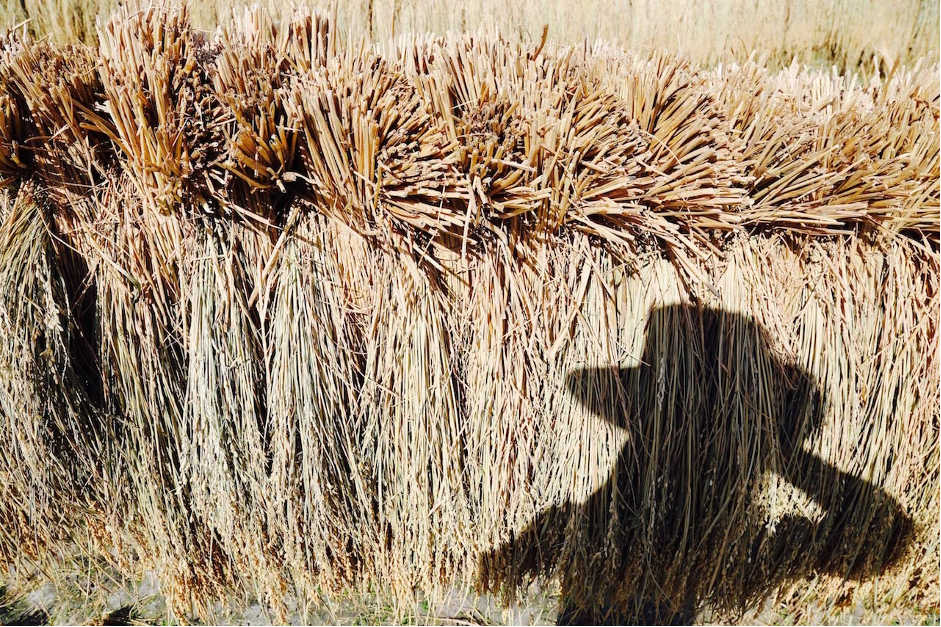
Ripped golden rice
For most of us, this century has been extremely generous: economically, socially, in health. We have had our ups and downs, but on the whole, most of us have been blessed with possibilities and technologies that gave us a kind of balance between progress and destruction. We forget too easily that what we treat as normal is not owed to us. It is a duty.
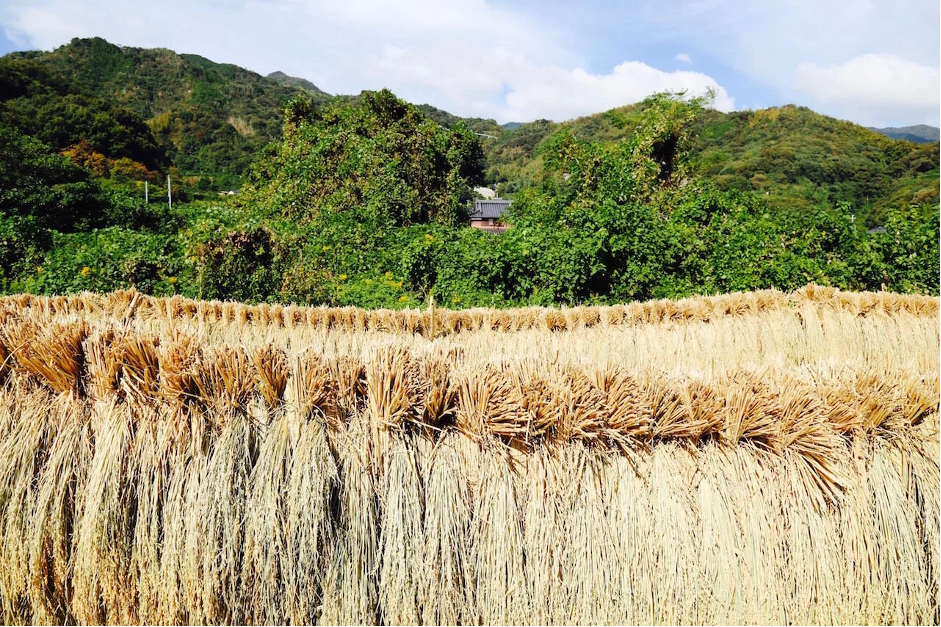
suoOshima, rice paddy fields
Toshifumi Ishida's golden rice, bowing under the weight of its own abundance, taught me something no amount of wealth or success ever could.
In Japan, a man's greatness is not measured by how tall he stands, but by how deeply he bows. The richer the grain, the lower it leans towards the earth that made it.
Writing this from the water, somewhere between the shores of Langkawi and the open sea, I find the image strangely exact. Whatever life brings or takes, the wiser response is rarely to harden. It is to soften.
To remember, as the rice reminds us, that maturity and gold are not invitations to rise above. They are reasons to bow deeper.